News & Updates
Recent updates from America’s Watershed Initiative.News & Updates
Recent updates from America’s Watershed Initiative.AWI Newsletter: July-September 2026
Welcome Brent Hoerr to the AWI Board of Directors!
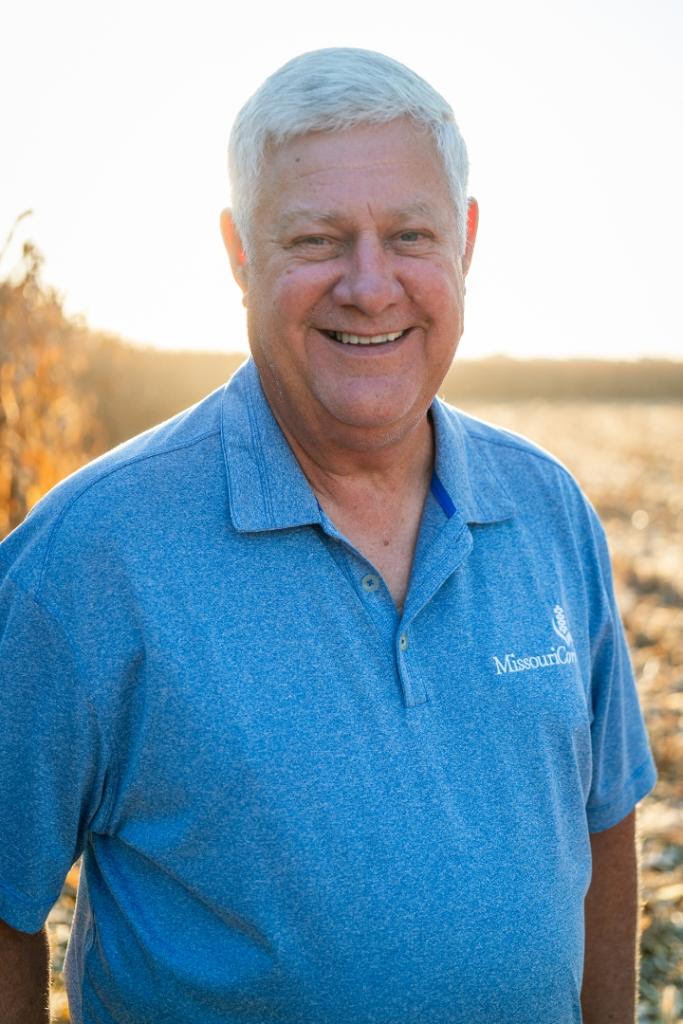
AWI is pleased to welcome Brent Hoerr to our Board of Directors!
Brent is a corn and soybean farmer in Marion County, Missouri. During his many years on the Missouri Corn Growers Association Board, he held several leadership positions in addition to serving as Board President. He has also contributed to the Sustainable Ag Research Action Team of the National Corn Growers Association and the Innovation & Sustainability Advisory Team of the U.S. Grains Council. In addition, he spent decades with the Marion County Farm Bureau, where he also held several leadership roles. Brent brings extensive experience in agriculture, conservation, and agricultural leadership, along with a strong commitment to responsible land stewardship.
As AWI works to bring people and perspectives together across the Mississippi River Watershed, Brent’s experience offers valuable insight into the connections between agriculture, healthy working lands, and the watershed. He has spent his career bringing people to the table, and that is exactly the kind of leadership our watershed needs. We are eager to learn from him and work alongside him to advance whole-watershed solutions.
Please join us in welcoming Brent to the AWI Board!
AWI Board Retreat Brings Board and Staff Together in New Orleans
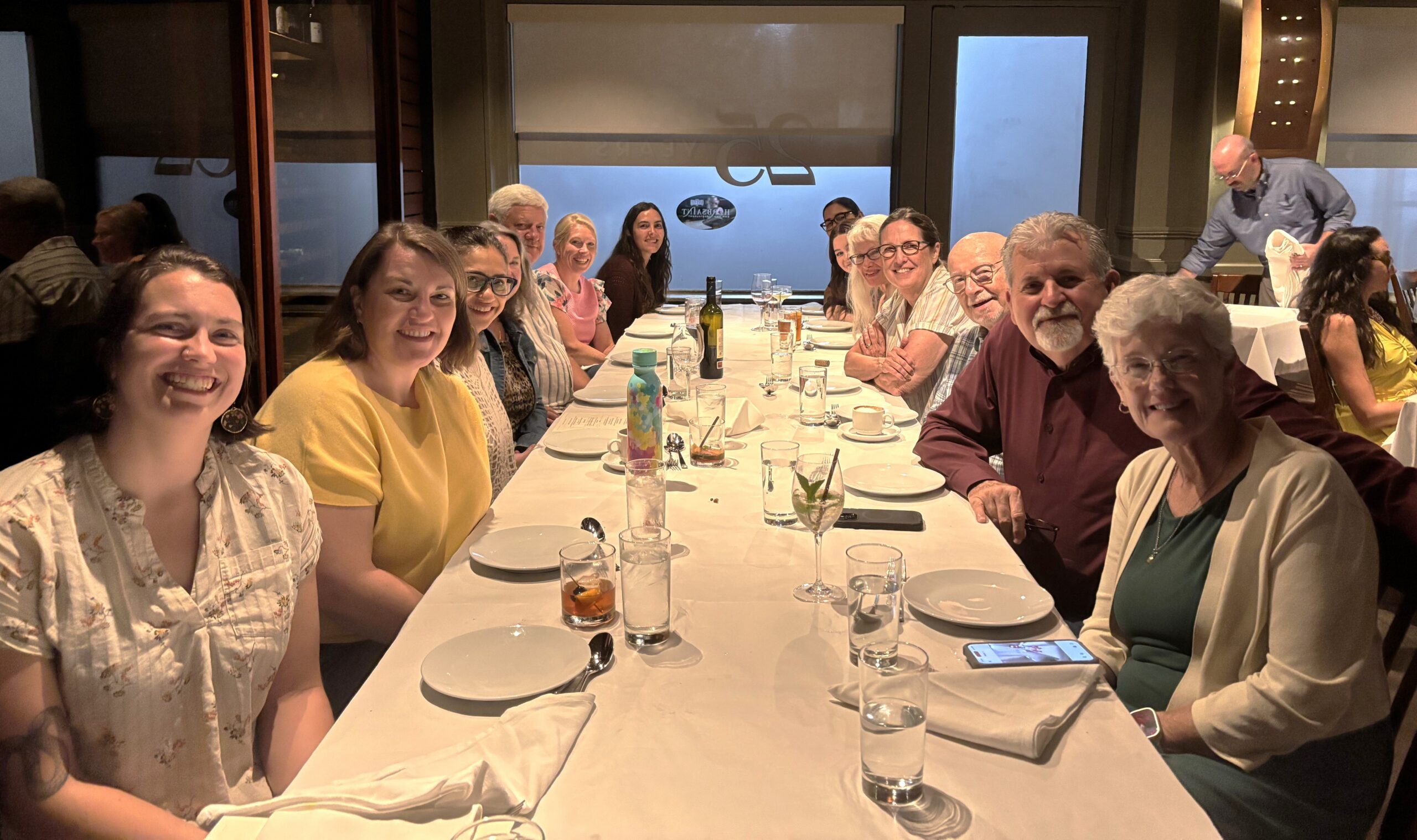
From September 21–23, AWI brought our Board of Directors together in New Orleans for our annual retreat. Board and staff spent three days connecting, reflecting on AWI’s work, and looking ahead to the priorities that will shape the year ahead.
We were grateful to meet at the offices of Modjeski and Masters, hosted by former AWI Secretary Yelena Rivera, PE. As a bridge designer, Yelena’s work was a fitting backdrop for AWI’s role in bringing people and perspectives together across the Mississippi River Watershed. Thank you to Yelena for hosting us and for her service to AWI.
The Board also elected officers for the coming year: Rachel Orf will continue as Chair, with Rainy Shorey serving as Past Chair, Julie Blackburn as Vice Chair and Secretary, and Jim Crum as Treasurer.
Discussions throughout the retreat focused on the Mississippi River Watershed Partnership, the Mississippi River Water Action Collaborative, and other priorities that will guide AWI’s work moving forward.
We’re grateful to our Board and staff for a productive and energizing few days together, and for their continued commitment to building connections and advancing basin-wide solutions.
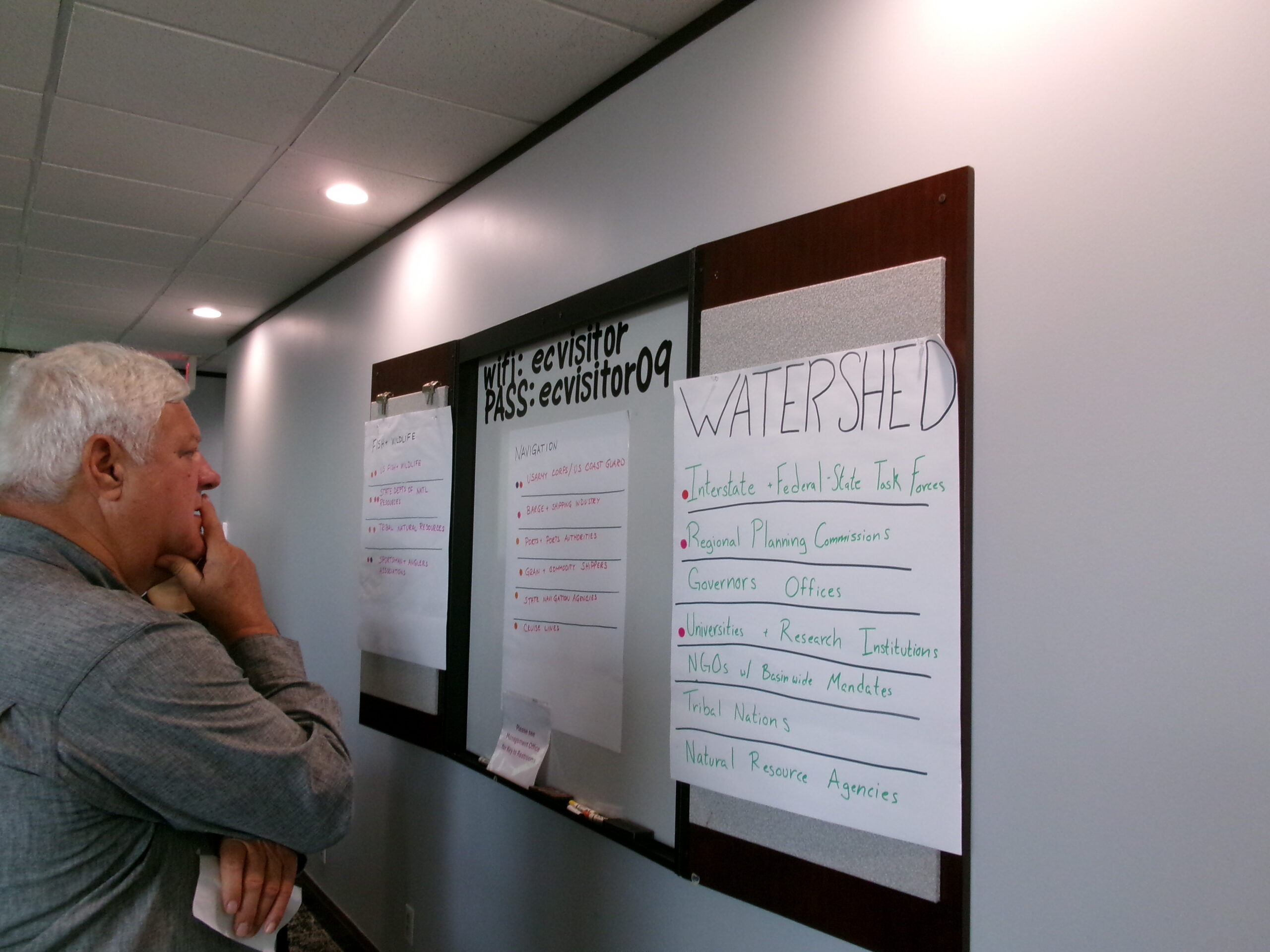
Gulf Scholars Reflect on Their Work with AWI
This spring and summer, AWI was proud to host three undergraduate interns from Tulane University’s Gulf Scholars Program, an interdisciplinary initiative that prepares students to address complex environmental and community challenges through hands-on learning, research, and partnerships. During their time with AWI, the students contributed to projects connected to the Mississippi River Watershed while gaining firsthand experience with watershed-focused collaboration. Below, they reflect on their work, what they learned, and what they will carry forward from their experience with AWI.
Kate Engleman:
My internship with America’s Watershed Initiative focused on science communication and public outreach, helping to make me a much more effective communicator overall. For my project, I created a series of infographic posts for AWI’s LinkedIn, as well as a corresponding posting calendar. These posts helped translate technical scientific language, such as NOAA’s annual reports, into something much more accessible for a public audience. These posts also helped to celebrate and bring awareness to events throughout the year, such as Earth Day, the International Day for Biodiversity, and many more!
Lily House:
I’m a member of the Gulf Scholars Program at Tulane University, so much of my interest lies in challenges facing the Gulf Coast and communities surrounding it. I’ve been exposed primarily to coastal hazards such as sea level rise, storm surge, and hurricanes, so my internship with America’s Watershed Initiative was a great way to expose myself to something different and gain knowledge of riverine systems. My literature review focused on communicating flood risks to at-risk communities in the Lowermost Mississippi River Watershed, so I was able to concentrate on the Gulf region while gaining exposure to flooding as a consequence of interactions in upstream watersheds, subsidence, and population characteristics. Assembling this literature review broadened my skills as an environmental biology major and allowed me to combine environmental work with writing in a meaningful way, which is a connection I hope to forge in my career.
Mirabelle Zexter-Kaiser:
During my time interning with America’s Watershed Initiative I have gained a deeper understanding of how to translate geospatial datasets into visuals that can help illustrate nutrient loading data as well as other information sets relating to restoration and conservation at a large scale. Not only did this experience help develop my skills in generating maps for this purpose, but it also taught me new ways to properly communicate, obtain, and understand the data that was being interpreted. Looking forward, I plan to use the techniques and knowledge I have acquired this summer to strengthen my perception of architecture and the built environment. Through integrating my education and background in architecture with new perspectives through the lens of geospatial analysis- as well as a stronger comprehension of restoration projects at a larger scale, I hope to make a difference in contributing to regenerative or environmentally informed architectural work in the future.

Basin Perspectives Webinar Series Begins this October
The Mississippi River Watershed Partnership (MRWP) is bringing partners together for Basin Perspectives, a five-part webinar series highlighting the Upper Mississippi, Missouri, Ohio-Tennessee, Arkansas-Red-White, and Lower Mississippi basins. Each webinar features several organizations working in one of these basins, offering a look at ongoing efforts, key challenges, and opportunities for collaboration.
Through Basin Perspectives, partners can continue learning about the unique priorities and programs across the watershed, share ideas and lessons learned, and identify opportunities to work together.
By creating space for partners to hear directly from organizations working across different parts of the watershed, the series supports MRWP’s goal of strengthening connections and advancing shared solutions across basin boundaries.
The webinar series will start with the Lower Mississippi River Basin on October 15th at 1PM CT and the Ohio River Basin on November 4th at 12PM CT.
You can register for the first two webinars on the MRWP home page.
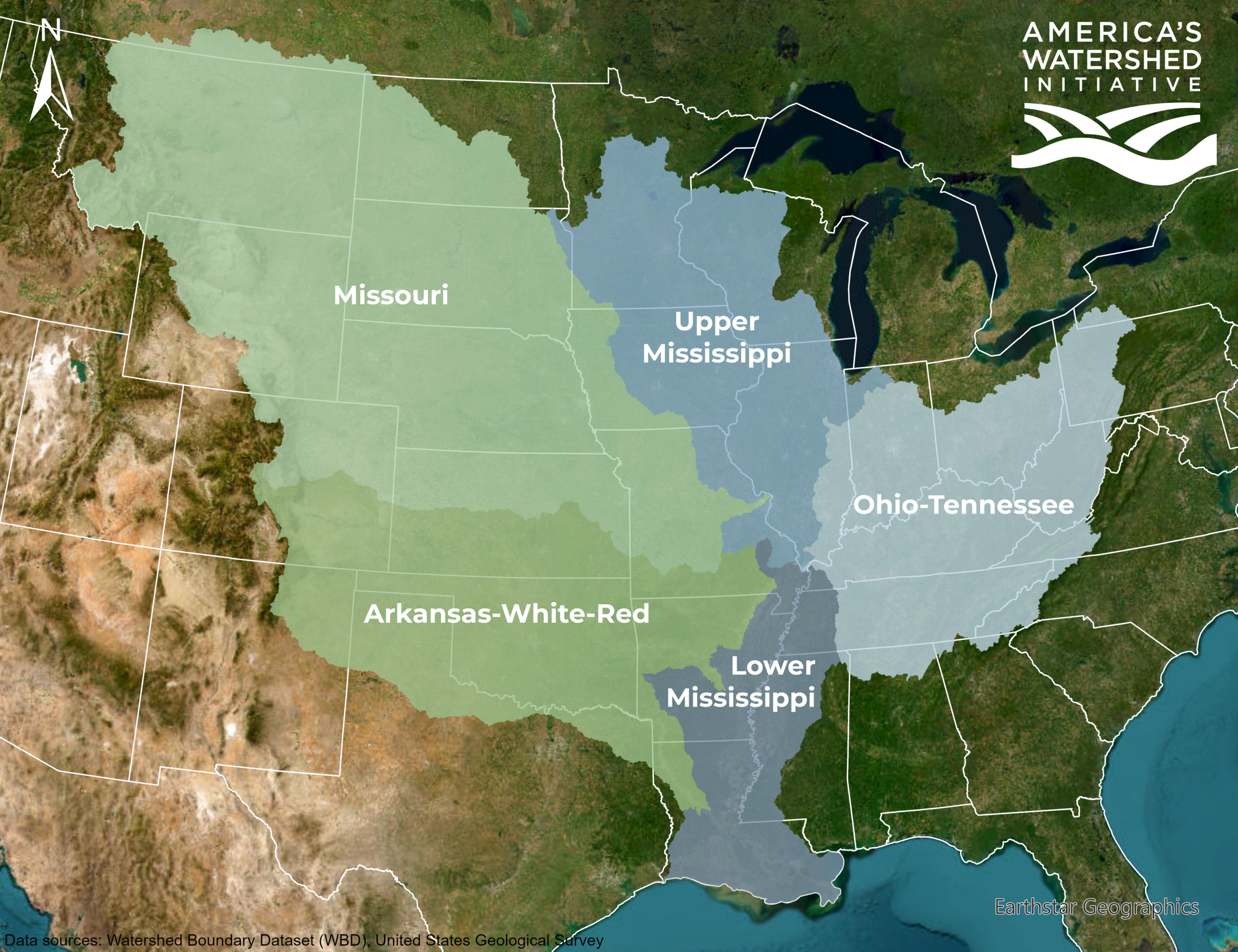
From Source to Gulf: AWI Takes the Message on the Road
This summer, AWI staff connected with partners and communities across the Mississippi River Watershed through presentations, conferences, and other events. From sharing the latest on AWI’s work to discussing key challenges and opportunities facing the watershed, these gatherings provided valuable opportunities to exchange ideas and strengthen connections across the watershed. Here’s a look at where our team has been and what we’ve been sharing this summer.
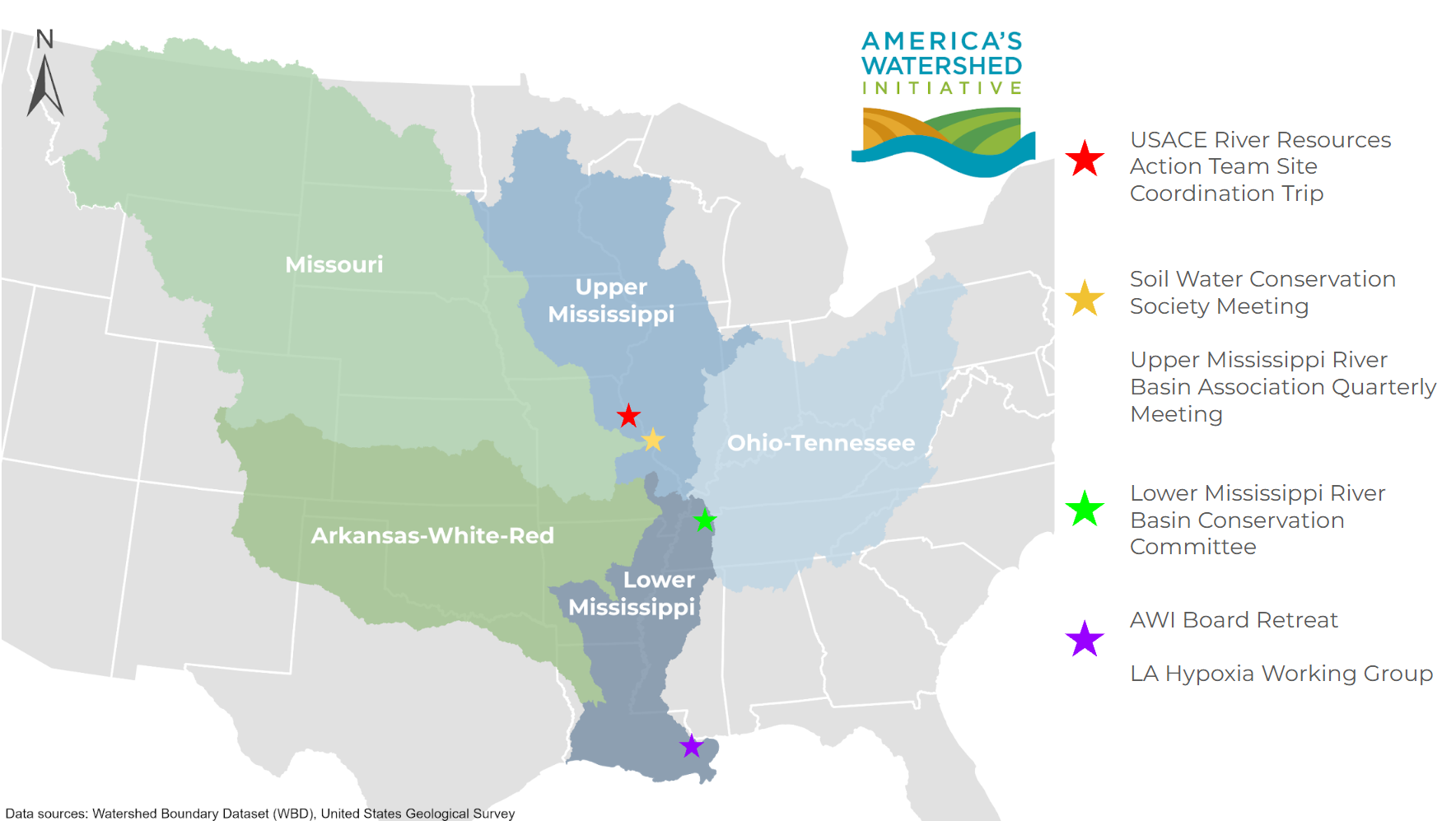
AWI Launches Watershed Notes
AWI is excited to launch Watershed Notes, a new monthly publication series designed to make important watershed science and management information easier to understand and apply. Each issue provides a concise look at recent research, programs, or initiatives across the Mississippi River Watershed, highlighting key takeaways and why they matter. The series is part of AWI’s ongoing effort to connect knowledge with the people working across the watershed and support informed decision-making and collaboration.
Explore the Watershed Notes published so far:
July
Impact of Water Loss on the Sustainability of the Lowermost Mississippi River System
Mead A. Allison and Barbara A. Kleiss
Department of River-Coastal Science and Engineering, Tulane University, New Orleans, Louisiana, USA
This inaugural Watershed Note summarizes new research on increasing water loss in the lower Mississippi River and its impacts on navigation, sediment transport, and the long-term sustainability of the Mississippi River Delta.
August
The Iowa Watershed Approach: A Vision for Iowa
Larry J. Weber
IIHR – Hydroscience and Engineering, University of Iowa, Iowa City, Iowa, USA
This Watershed Note highlights the Iowa Watershed Approach, a collaborative initiative that has secured more than $100 million to help Iowa communities reduce flood risk through watershed-based planning.
September
Law of the Mississippi RIver: Where Do We Go Next?
Haley Gentry
Tulane Institute on Water Resources Law & Policy, New Orleans, Louisiana, USA
This Watershed Note showcases the Law of the Mississippi River, an online resource created by the Tulane Institute on Water Resources Law & Policy that provides a snapshot of how shared water resources are managed across the 10 states along the Mississippi River mainstem.
October
Untangling Urban Growth from Climate Change in Local Watersheds
Jason Knouft
Department of Biology and WATER Institute, Saint Louis University, St. Louis, Missouri, USA
This Watershed Note explores how urban growth and climate change independently and collectively affect streamflow in the Meramec River watershed in eastern Missouri. The study demonstrates how urban growth can intensify streamflow extremes and contribute to greater hydrologic variability, with implications for flooding, ecosystem health, and watershed resilience.

Feeding Curiosity: AWI Lunch and Learn Highlights
Our Lunch and Learn webinars continue to draw strong interest and spark meaningful conversation.
Miss one? Recordings are available on our YouTube channel and on our website’s Webinar Library.
July
Gateway to the Gulf: Maintenance of the Mississippi’s Entrance Channel
Watch here
August
Informing Nutrient Loss Reduction Strategies Using Flow-Aware Trend Methods
Watch here
September
Aspirational Futures for Food, Energy, Water, and Ecosystems in the Upper Mississippi River Basin
Watch here
America’s Watershed Initiative is building a future where science guides decisions and collaboration drives results. Join us in protecting and celebrating the Mississippi River Watershed. Visit https://americaswatershed.org/